Supporting infants and children who are late to sit, crawl, stand, or walk
Delayed motor milestones physiotherapy at Next Level Speech and Physiotherapy Dubai is designed for infants and young children who need extra support developing their early movement skills. Our DHA-licensed pediatric physiotherapists help children progress through rolling, sitting, crawling, standing, and independent walking using gentle, child-friendly, evidence-based techniques.
We support families across Dubai Marina, JLT, JBR, Palm Jumeirah, Bluewaters Island, and nearby communities with personalised physiotherapy that builds confidence, strength, and age-appropriate mobility.
To learn more about our full pediatric services, visit our Pediatric Physiotherapy page.
Who This Service Is For?
This service is ideal for infants and toddlers who show slower-than-expected development in their early physical skills. Parents may notice:
- Late rolling, sitting, crawling, or walking
- Difficulty transitioning between positions
- Poor balance or unsteady standing
- Reduced muscle tone or core strength
- Preference for using one side of the body more than the other
- Limited exploration or hesitancy to move
Delayed motor milestones may occur due to low muscle tone, prematurity, sensory challenges, or simply needing more guided practice. Our role is to support your child with early, structured movement experiences that help them progress safely and confidently.
Common Causes of Delayed Motor Milestones
Children may experience delays for various reasons, including:
- Hypotonia (low muscle tone)
- Premature birth or low birth weight
- Developmental coordination difficulties
- Torticollis or postural asymmetry
- Sensory processing differences
- Neurological conditions such as CP or HIE
- Limited tummy time or reduced movement opportunities
Understanding the underlying factors helps us design an effective and personalised therapy plan.
How We Assess Delayed Motor Milestones
Your child’s first session includes a gentle, play-based assessment to understand how they move, explore, and engage. This may include:
- Screening of rolling, sitting, crawling, standing, and walking
- Muscle tone, strength, and mobility evaluation
- Posture and alignment assessment
- Balance and coordination checks
- Observation of functional transitions (e.g., lying to sitting)
- A discussion with parents about routines, environment, and movement habits
This assessment forms the foundation of your child’s personalised developmental plan.
How Physiotherapy Helps Children Progress
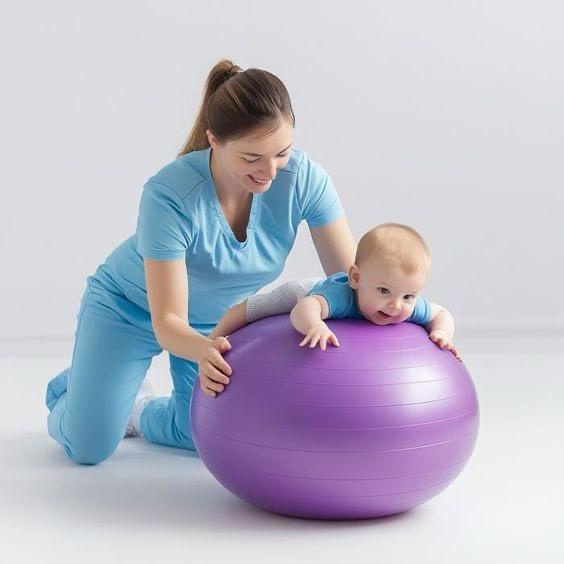
Our therapy approach uses playful, structured activities that encourage children to explore movement safely. Treatment may include:
- Guided play to practise rolling, crawling, standing, and cruising
- Strengthening exercises for core, legs, and postural muscles
- Balance and coordination training
- Sensory-motor activities to improve body awareness
- Functional movement training (e.g., floor-to-stand transitions)
- Gentle stretching and mobility work when needed
- Parent coaching so progress continues at home
Sessions are designed to be motivating, gentle, and fun — helping children build confidence with every achievement.
Home-Based Support for Faster Improvement
Children often progress more quickly when therapy strategies are reinforced at home. We provide:
- Simple home-program exercises
- Daily routines and play ideas that promote movement
- Guidance on setting up safe play spaces
- Recommendations for developmental toys
- Clear instructions for supporting posture and transitions
Families who prefer home sessions can also choose our home physiotherapy service, offering comfort and convenience while supporting milestone development.
What to Expect in Your Child’s Sessions
Each session is structured to feel safe, engaging, and development-focused:
- One-on-one developmental milestone assessment
- Play-based activities to encourage movement and exploration
- Hands-on facilitation to support proper movement patterns
- Progress tracking and steady advancement
- Parent involvement for daily follow-through
We help your child develop independence, confidence, and smooth progression in their movement skills.
Why Choose Next Level Speech and Physiotherapy Dubai
Families trust us because we offer:
- DHA-licensed pediatric physiotherapists experienced in developmental delays
- A warm, child-friendly therapy environment
- Clinic or home-based sessions to suit your routine
- A clear, structured developmental plan tailored to your child
- Consistent follow-up with the same therapist
- Support for both simple delays and complex developmental needs
We are committed to helping children build strong, healthy movement foundations — one milestone at a time.
Get Started
We welcome infants and children from Dubai Marina, JLT, JBR, Bluewaters Island, Palm Jumeirah, and nearby communities.
To book an appointment or speak with our team, please contact us.
Let us help your child move confidently, safely, and at a pace that supports healthy development.
When “Waiting It Out” Is Not Always the Best Option
Many parents are told to “wait and see” when their child is late to sit, crawl, or walk. While some children do catch up naturally, others benefit from early guidance to help their bodies and nervous systems organise movement more efficiently. The challenge is knowing when waiting supports development and when it quietly delays progress.
Motor development happens in critical windows, especially during infancy and early childhood. During these periods, the brain is highly responsive to movement experiences. Gentle physiotherapy does not rush a child or force milestones — it simply provides the right opportunities for strength, balance, and coordination to develop naturally.
Early support can also prevent compensatory habits, such as favouring one side of the body or avoiding certain movements altogether. These habits may not seem concerning at first but can affect posture, coordination, and confidence later.
Physiotherapy is not about labelling or pressuring children. It is about understanding how a child moves today and supporting what comes next in a way that feels safe, playful, and developmentally appropriate.
FAQs for Delayed Motor Milestones Physiotherapy
1. What are delayed motor milestones?
Motor milestones are the physical skills babies develop as they grow — such as rolling, sitting, crawling, standing, and walking. When a child takes longer than expected to achieve these skills, it is considered a delay. Physiotherapy helps identify why the delay is happening and supports your child in developing these movements safely.
2. When should I get my child assessed for delayed milestones?
It is recommended to book an assessment if your child:
- Is not sitting by 8 months
- Is not crawling by 10–11 months
- Is not pulling to stand by 12 months
- Is not walking by 15–18 months
Early evaluation helps prevent secondary delays and supports faster progress.
3. Can delayed milestones resolve on their own?
Some children do catch up naturally, but many benefit greatly from guided support — especially if low muscle tone, coordination challenges, or neurological concerns are present. Physiotherapy ensures your child progresses safely and confidently without unnecessary waiting.
4. What happens during a physiotherapy assessment?
We observe how your child moves, plays, and transitions between positions. The therapist checks strength, balance, muscle tone, posture, and developmental skills. Parents receive clear guidance on what the child needs and how therapy will help.
5. How long does physiotherapy take to show results?
Most children begin showing progress within a few sessions. The duration depends on the underlying cause of the delay, consistency with home exercises, and how frequently therapy sessions are scheduled.
6. Do parents need to participate in the sessions?
Yes. Parent involvement is a key part of developmental therapy. Your therapist will guide you on simple, daily activities you can use at home to reinforce your child’s progress.
7. Is physiotherapy safe for infants and young children?
Absolutely. Sessions are gentle, play-based, and age-appropriate. All techniques follow child-safe physiotherapy standards, ensuring your child feels supported and comfortable throughout therapy.
8. Are home physiotherapy sessions available?
Yes. Home sessions are ideal for infants and toddlers who feel more relaxed in familiar surroundings. Many children show faster progress when therapy is blended with everyday routines at home.
9. What causes delayed motor milestones?
Common causes include low muscle tone, premature birth, torticollis, lack of tummy time, sensory challenges, developmental coordination issues, or neurological conditions. Our assessment helps determine which factors are affecting your child.
10. Will my child need long-term therapy?
Not always. Some children require only short-term intervention, while others with underlying conditions may need longer support. Your therapist will outline a clear, personalised plan after the initial assessment.
11. What is my next step if I’m concerned about my child’s development?
The best place to start is with a developmental assessment. Our team will guide you through what your child needs and how physiotherapy can support healthy movement development.
If you’re ready to schedule, please visit our Contact Us page.