Neurological conditions affect more than muscles — they influence coordination, balance, reaction time, and confidence in movement. After a stroke or with progressive neurological disorders, everyday activities such as walking, standing, or using the hands can feel uncertain.
At Next Level Speech and Physiotherapy Center, Dubai, our adult neurological rehabilitation program is delivered within our structured physiotherapy care services, supporting residents across Dubai Marina and nearby communities with evidence-based, goal-oriented therapy.
Conditions We Commonly Support
Our neurological physiotherapy program is designed for adults managing:
Stroke recovery (early and chronic stages)
Parkinson’s disease
Balance and coordination disorders
Peripheral nerve injuries
Neuropathy-related weakness
Post-surgical neurological complications
Functional mobility decline after prolonged hospitalisation
We regularly work with families and caregivers from Dubai Marina, JLT, JBR, Palm Jumeirah, Bluewaters, and The Greens who are seeking structured rehabilitation in a professional and supportive environment.
How Neurological Physiotherapy Works
Unlike standard musculoskeletal therapy, neurological rehabilitation focuses on retraining the brain-body connection.
Phase 1 – Assessment & Movement Mapping
Your first session includes a comprehensive neurological and functional assessment, which may involve:
Balance and gait analysis
Muscle strength and tone evaluation
Coordination testing
Functional task assessment (transfers, stairs, grip use)
Fall-risk screening
This assessment forms the foundation of your personalised plan delivered through our adult physio services.
Phase 2 – Targeted Neuromotor Retraining
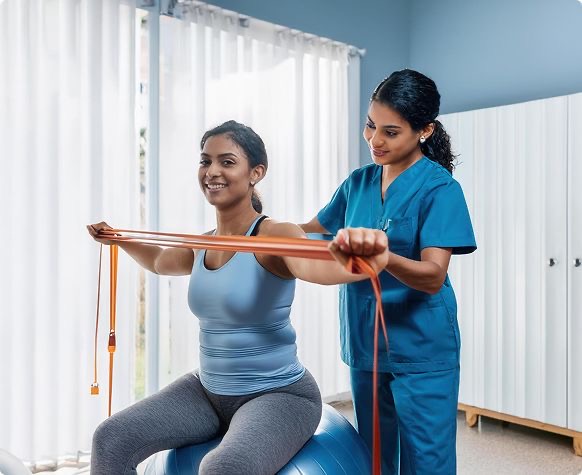
Treatment may include:
Task-specific movement practice
Balance and stability training
Gait retraining and walking endurance work
Strengthening of weakened muscle groups
Functional electrical stimulation (when appropriate)
Coordination and reaction training
The goal is not just exercise — it is functional independence.
Phase 3 – Functional Reintegration
As progress improves, therapy shifts toward:
Community mobility confidence
Stair and uneven surface training
Hand function improvement
Dual-task balance challenges
Fall-prevention strategies
Progression is gradual and based on measurable functional gains.
Why Early Rehabilitation Matters
Neurological recovery is strongly influenced by repetition and consistency. Research shows that structured, task-oriented physiotherapy can significantly improve walking ability, balance, and independence when applied consistently.
Starting at the right time — whether immediately after discharge or months later — can still produce meaningful improvements.
A Collaborative, Family-Centered Approach
Neurological rehabilitation often involves caregivers and family members. We provide:
Clear home guidance
Safe transfer techniques
Exercise programs for continued progress
Fall-prevention education
For patients with limited mobility, therapy may also be arranged through our home physio option.
Regain Confidence in Movement
Whether you are recovering from a stroke or managing Parkinson’s-related mobility changes, structured neurological physiotherapy can help restore independence and safety.
Arrange your neurological assessment at our Dubai Marina clinic by visiting our contact page.
FAQs – Neurological Physiotherapy (Adults)
When should stroke rehabilitation begin?
Rehabilitation often begins as soon as medically stable. However, even months or years after a stroke, targeted therapy can still improve balance, walking ability, and functional independence.
Can physiotherapy help Parkinson’s disease?
Yes. Physiotherapy focuses on gait training, posture correction, balance improvement, and movement amplitude exercises to help manage symptoms and maintain mobility.
Is neurological physiotherapy only for severe conditions?
No. Even mild balance changes or early movement decline benefit from structured intervention to prevent falls and maintain independence.
How often are sessions required?
Frequency depends on the condition and recovery stage. Some individuals benefit from multiple sessions per week initially, followed by maintenance programs.
Can therapy help reduce fall risk?
Yes. Fall-prevention strategies and balance training are key components of neurological rehabilitation.
Do you work with family members or caregivers?
Yes. We provide practical guidance so caregivers can safely assist with mobility and exercises at home.
Is home physiotherapy effective for neurological patients?
Home-based sessions are often very effective, especially for individuals who require training in their real-life environment.
What results can realistically be expected?
Outcomes vary depending on diagnosis and severity, but many patients experience improvements in walking stability, coordination, and daily task performance with consistent therapy.