
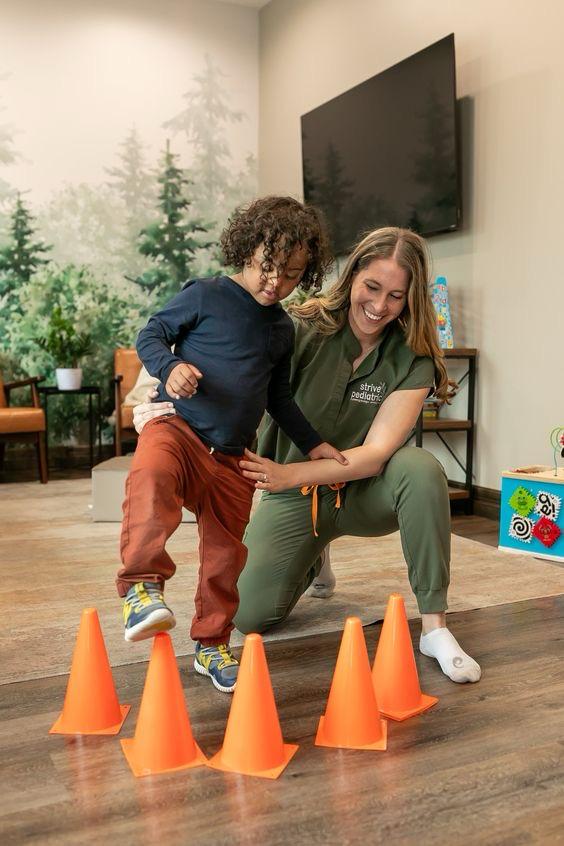
Helping children gain confidence, balance, and smoother movement
Children with coordination or movement challenges often struggle with tasks that seem simple for others — running, climbing, jumping, catching a ball, or navigating playground activities. At Next Level Speech and Physiotherapy Dubai, our pediatric physiotherapists support children who experience clumsiness, poor balance, slow motor development, Dyspraxia-type symptoms, or difficulty planning movements.
Families from Dubai Marina, JLT, JBR, Palm Jumeirah, Bluewaters Island, and surrounding areas visit us for specialised, child-friendly support.
To view all related services, visit our Pediatric Physiotherapy page.
Who Benefits From This Service
This program is designed for children who:
- Trip or fall more often than expected
- Appear uncoordinated during daily play or sports
- Struggle with climbing, jumping, hopping, or balancing
- Have difficulty catching, kicking, or throwing balls
- Move more slowly than peers
- Show signs of motor-planning problems
- Avoid active play due to low confidence
- Demonstrate characteristics similar to Dyspraxia / DCD
These challenges may affect school activities, sports, handwriting, playground participation, and overall self-esteem.
Why Coordination Issues Occur
Coordination difficulties can arise from several developmental factors, including:
- Developmental Coordination Disorder (DCD)
- Sensory integration challenges
- Low core stability or weak postural control
- Delayed early motor skills
- Motor-planning difficulties
- Prematurity
- Differences in muscle tone (such as Hypotonia)
- Neurological conditions
- Reduced exposure to active play
Understanding the underlying reason helps us target therapy more effectively.
Our Evaluation Process: Understanding Your Child’s Movement Style
During an initial assessment, we use structured but playful tasks to observe:
- Balance reactions and body stability
- How arms and legs work together during movement
- Strength and posture in sitting, standing, and dynamic tasks
- Ability to follow multi-step motor activities
- Agility, timing, and rhythm
- Ball-handling skills
- Confidence during climbing or navigating obstacles
- Overall coordination and body awareness
The assessment gives parents a clear picture of what’s going well and which areas need support.
Therapy Approach: Building Skills Through Play and Practice
Our sessions integrate purposeful, engaging activities to improve movement control. These may include:
- Strengthening exercises for core, hips, and upper body
- Obstacle-course challenges for motor planning
- Balance platforms and stability tasks
- Bilateral coordination games (using both sides of the body)
- Sensory-motor play to enhance body awareness
- Targeted ball skills to build timing and coordination
- Activities that gradually increase complexity
- Movement confidence training for playground and school settings
Sessions are enjoyable and motivating, helping children develop smoother, more controlled movement patterns.
Supporting Progress at Home
To reinforce improvements, we guide parents on:
- Simple coordination games that can be done daily
- Exercises to improve balance, agility, and bilateral skills
- Activities for playground or school participation
- How to set up home environments that encourage safe movement exploration
- Strategies that help children stay motivated without pressure
Families may also choose home-based physiotherapy for additional convenience.
What a Typical Session Looks Like
Therapy sessions may include:
- Warm-up activities to prepare the body for movement
- Progressive coordination tasks tailored to the child
- Skill-building exercises for sports and playground activities
- Motor-planning challenges
- Balance and stability stations
- Friendly mini-goals to build confidence
- A brief parent review at the end of each session
Our aim is to help every child feel capable, confident, and excited to move.
Why Families Choose Us
Parents trust our team because we offer:
- DHA-licensed pediatric physiotherapists with specialised expertise in movement disorders
- A welcoming, child-centred environment
- Flexible options for home or clinic-based therapy
- Customised plans that reflect each child’s pace and needs
- Consistent follow-up and clear communication
- Support for mild, moderate, and complex coordination challenges
We focus on helping children build lifelong movement confidence.
Start Your Child’s Journey Toward Better Coordination
We welcome children from Dubai Marina, JLT, JBR, Bluewaters Island, Palm Jumeirah, and nearby areas.
To book a session or speak with our team, please visit our Contact Us page.
Why Clumsiness Is Not a Personality Trait
Children who struggle with coordination are often described as “clumsy,” “careless,” or “not sporty.” In reality, coordination is a learned motor skill that depends on balance, strength, timing, body awareness, and motor planning. When any of these components are underdeveloped, movement can appear awkward or uncontrolled.
Many children with coordination challenges want to participate but feel frustrated because their bodies do not respond the way they expect. This can lead to avoidance of physical play, reduced confidence, or anxiety around sports and playground activities.
Physiotherapy helps children break this cycle by addressing the physical foundations of movement. Through structured play, repetition, and guided practice, children learn how to control their bodies more efficiently and predictably.
When coordination improves, children often show noticeable changes not only in movement but also in confidence, willingness to try new activities, and enjoyment of physical play. Addressing coordination difficulties early helps children participate more fully in school, sports, and everyday life.
FAQs – Coordination & Movement Challenges
1. How do I know if my child has a coordination issue?
If your child seems unusually clumsy, avoids physical activities, or struggles to learn new motor skills, an assessment can provide clarity.
2. Is this related to Dyspraxia / Developmental Coordination Disorder (DCD)?
Many children with coordination difficulties show similar characteristics. A formal diagnosis is not required for physiotherapy — functional challenges are enough.
3. Will my child improve with therapy?
Most children show meaningful progress in balance, strength, and motor control when therapy and home practice are combined.
4. What age group is this suitable for?
This service is helpful for preschoolers, school-age children, and older kids who need support with coordination, sports readiness, or physical confidence.
5. How long will therapy take?
Children often show early progress within a few weeks. Some may need longer-term support depending on underlying causes.
6. Do you offer home-based sessions?
Yes, home physiotherapy is available for families who prefer familiar environments or require scheduling flexibility.
7. How do I book an appointment?
Simply visit our Contact Us page to get started.