
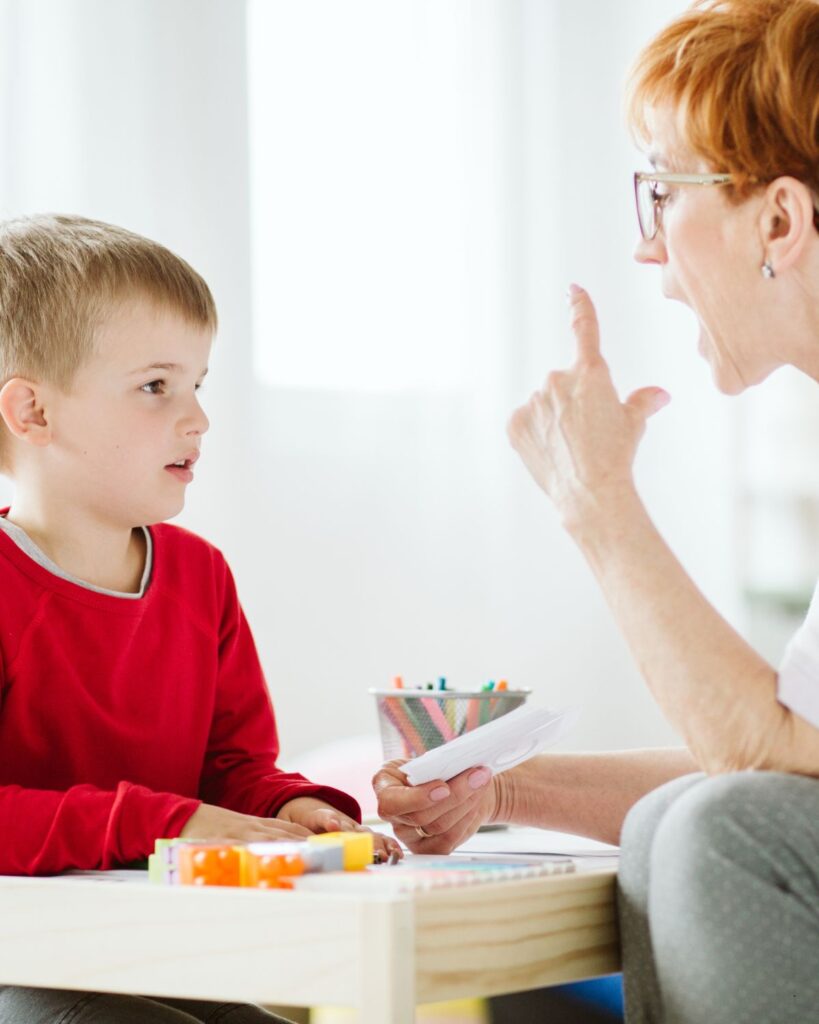
Dubai is one of the few places in the world where a child might hear three languages before breakfast. Arabic at home, English at school, and whatever their best friend’s family speaks on the weekends. For many families here, raising children across multiple languages is not a choice — it is just life.
And then a concern surfaces. The child is not talking as much as expected. Or their speech is unclear. Or the nursery has flagged something. And suddenly parents are faced with a question that feels impossible to answer on their own: is this a real speech delay, or is it just the languages?
It is one of the most common questions we hear at Next Level Speech and Physiotherapy Center, Dubai. And it is one that genuinely requires a proper assessment to answer — because getting it wrong in either direction has real consequences for the child.
Why This Question Is So Important
If a bilingual child with a true speech delay is told it is just the languages, they miss out on support during the years when intervention has the greatest impact.
If a bilingual child who is developing normally is treated for a delay they do not have, they are put through unnecessary intervention, and their family carries unnecessary worry.
Neither outcome serves the child. Getting the assessment right is everything, and that requires a therapist who understands bilingual language development — not just speech development in general.
How Bilingual Language Development Actually Works
There are some persistent myths about bilingual children that are worth addressing directly.
Bilingual children do not learn language more slowly than monolingual children overall. They distribute their learning across two languages, which means their vocabulary in each individual language may be smaller than a monolingual child’s, but their total vocabulary across both languages is comparable.
Mixing languages, sometimes called code-switching, is not a sign of confusion or delay. It is a normal feature of bilingual communication and reflects sophistication, not difficulty.
The key clinical question is not how a child compares to monolingual norms in a single language. It is how they are developing across both languages together, whether they are meeting communication milestones overall, and whether there are patterns that suggest a genuine underlying difficulty.
Signs That Suggest a Real Delay Rather Than Bilingual Variation
These signs are worth taking seriously regardless of how many languages a child is exposed to:
- Limited communication attempts across both languages, not just one
- Not meeting basic milestones such as first words, word combinations, or simple sentences in either language
- Difficulty understanding instructions given in their stronger language
- Frustration, withdrawal, or behavioral difficulties linked to communication
- Concerns from a nursery or school that go beyond language mixing or accent
Bilingual children may be quieter in one language or in new environments. But a child who is struggling to communicate meaningfully in any language is showing a pattern that warrants assessment.
How We Assess Bilingual Children
This is where the quality of assessment really matters. A bilingual child assessed only in English, using norms developed for monolingual English speakers, will frequently appear to have a delay that does not actually exist. This is one of the most common and most damaging errors in paediatric speech and language assessment.
At Next Level Speech and Physiotherapy Center, Dubai, we assess bilingual children across both or all of their languages where possible. We look at the total language picture, not just performance in one language. We use assessment tools that are appropriate for bilingual children and interpret results against bilingual norms rather than monolingual ones.
We also spend time understanding the child’s language environment — which language is spoken at home, which at school, how consistently each language is used, and at what age exposure to each language began. This context is essential for interpreting what we find.
What Therapy Looks Like for Bilingual Children
When therapy is indicated, the approach depends on the nature of the delay and the child’s language environment.
For most children, we recommend that therapy targets the home language or the language the child is most exposed to, particularly in the early years. This is sometimes surprising to families who assume English should be prioritized. But strengthening the foundation language supports overall language development, and skills transfer across languages more readily than many parents expect.
We work with families to ensure that home language use is valued and maintained. Research is clear that strong home language development supports, rather than competes with, the development of additional languages. A child does not have to choose.
Where a child’s school language is significantly behind and affecting their learning, we address that directly as well, in coordination with the school where possible.
Supporting Your Child at Home
One of the most important things multilingual families can do is maintain consistent, rich exposure to the home language. This means speaking it, reading in it, singing in it, and not switching to English just because the child goes to an English-medium school.
Children absorb language from meaningful interaction, not from passive exposure. Talking with your child in your strongest, most natural language gives them the richest possible input — and that matters more than which language it happens to be in.
We give families specific, practical guidance on supporting language development across their particular language combination, because every multilingual family’s situation is different.
A Clinic That Genuinely Understands Dubai’s Language Landscape
Many clinics in Dubai see bilingual children but assess them using tools and norms designed for monolingual populations. This leads to over-identification of delay in some children and under-identification in others.
Our team has specific experience in bilingual and multilingual speech and language development. We understand the particular combinations of languages spoken in Dubai families — Arabic and English, Hindi and English, Tagalog and English, Russian and English, and many others. We approach each child’s language profile with the nuance it deserves.
Our clinic is in Al Fattan Marina Business Hub in JBR, right in the heart of one of Dubai’s most internationally diverse communities. We see families from across Dubai Marina, JLT, Bluewaters, Palm Jumeirah, The Greens, and beyond.
Book an Assessment
If you have been wondering whether your child’s speech concerns are related to bilingualism or something that needs direct support, the answer is worth finding out properly.
Visit our pediatric speech therapy page to learn more about how we work with children. To book an assessment or have a conversation with our team first, reach out through our contact page or on WhatsApp.
Frequently Asked Questions
We speak Arabic at home but our child goes to an English nursery. Which language should we use at home? Speak the language you speak most naturally and fluently, which for most families is the home language. Your child will get extensive English exposure at nursery. What they need from you is rich, meaningful input in the language you know best. A child with a strong foundation in their home language is better equipped to develop additional languages, not less. Switching to English at home when it is not your strongest language often means the child gets poorer quality input in both languages.
My child mixes Arabic and English constantly. Is that a problem? No. Code-switching is a normal and sophisticated feature of bilingual communication. Bilingual children mix languages for many reasons — because a word comes more easily in one language, because they are addressing someone they associate with a particular language, or simply because both languages are active in their mind at once. It is not confusion, and it is not a sign of delay. It becomes clinically relevant only if it is accompanied by other signs of difficulty.
The nursery told us our child has a language delay. Should we stop using our home language and switch to English only? This advice is outdated and not supported by evidence. Dropping the home language does not help a child with a language delay catch up in English — it simply removes their strongest language foundation without providing any clinical benefit. If your child has a genuine language delay, they need targeted support in their strongest language first, not a change in which language the family uses at home.
Can a child have a speech delay in one language but not the other? Yes, particularly if exposure to the two languages is very uneven. A child who hears one language predominantly at home and another only at nursery may have stronger skills in the home language. This is expected and does not necessarily indicate a problem. A true underlying language delay tends to show up across both languages, not just the less-exposed one.
How do you assess a child whose home language your therapists do not speak? We use a combination of approaches — parent report measures in the home language, assessment tasks that can be conducted across languages, and observation of communication function rather than language-specific content. Where a specific language assessment is needed and we do not have a therapist fluent in that language, we work with trained interpreters and use tools designed for this purpose. We will always be transparent with you about how we are approaching the assessment and what its limitations are.