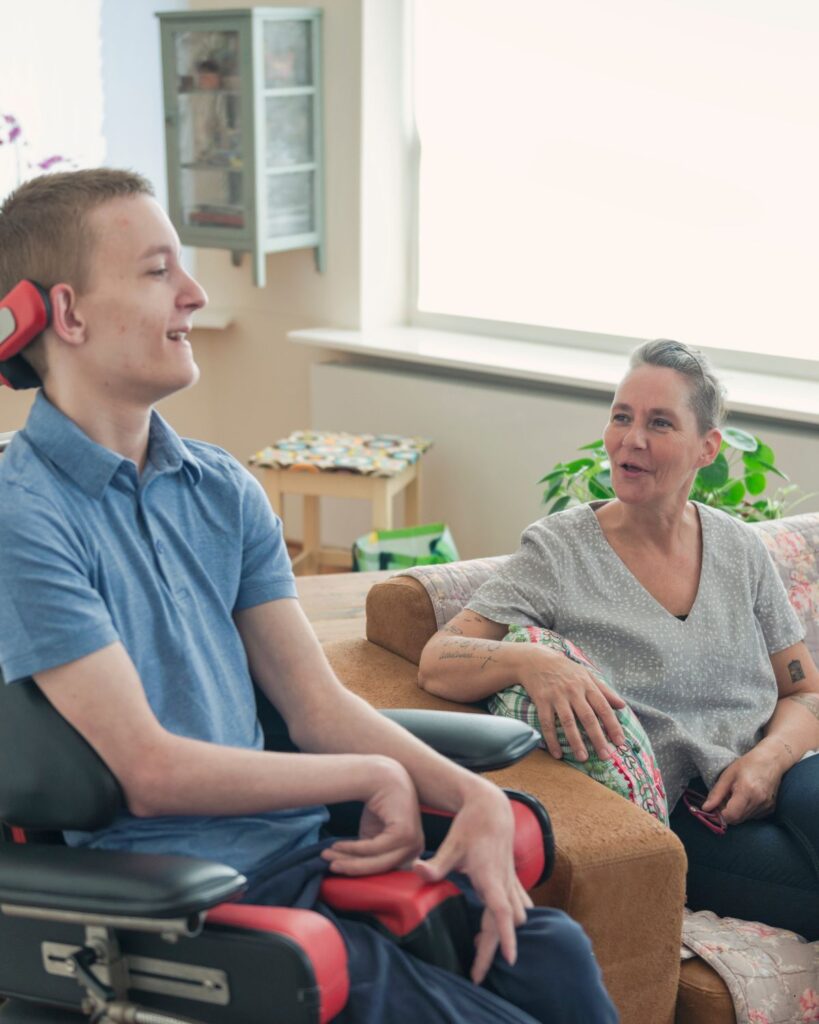
Cerebral palsy affects every child differently. Some children have mild motor difficulties that have a modest impact on speech. Others have more significant involvement that affects not just how they speak, but how they eat, how they breathe, and how they communicate across every setting of their daily life. What they all share is a need for support that understands the whole picture, not just the speech in isolation.
At Next Level Speech and Physiotherapy Center, Dubai, we work with children with cerebral palsy across the full range of presentations. Speech and language therapy for this group requires a particular kind of clinical thinking, one that accounts for the motor, sensory, and communication complexities that often sit alongside each other. It is work we take seriously, and it is work that makes a real difference when done well.
How Cerebral Palsy Affects Communication
Cerebral palsy is primarily a motor condition, but its effects on communication can be profound. The muscles involved in speech production, the lips, tongue, jaw, soft palate, and the respiratory system that powers voice, are all affected by the same motor control difficulties that affect movement elsewhere in the body.
Dysarthria is the most common speech presentation in children with cerebral palsy. It refers to slurred, slow, imprecise, or effortful speech resulting from the motor impairment. The specific pattern of dysarthria depends on the type of cerebral palsy and which muscle groups are most affected. Some children have speech that is intelligible with effort and familiarity. Others have speech that is very difficult for unfamiliar listeners to understand.
Beyond speech production, language development can also be affected, particularly where cerebral palsy is associated with cognitive or sensory differences. Some children with cerebral palsy have typical language development alongside motor speech difficulties. Others have broader language needs. Assessment is what distinguishes these profiles and shapes the therapy approach accordingly.
Feeding and swallowing are commonly affected too. The same oral motor difficulties that affect speech can affect how a child manages food and drink safely, and this is often one of the earliest areas where intervention is needed.
Communication Is More Than Speech
One of the most important principles guiding our work with children with cerebral palsy is that communication and speech are not the same thing. A child who cannot produce clear spoken language still has thoughts, needs, opinions, humor, and a great deal to say. Our job is to ensure they have a way to say it.
For many children with cerebral palsy, AAC plays a central role. This might be a low-tech communication board, a speech-generating device, an eye-gaze system, or a combination of tools tailored to the child’s motor abilities and communication needs. The goal is always a functional, reliable communication system that the child can use independently across different environments.
We assess each child’s AAC needs carefully and involve families thoroughly in both the selection and implementation of any system. A communication tool that a child only uses in therapy sessions is not achieving its purpose. We work to ensure AAC becomes genuinely integrated into daily life.
Signs That Prompt an Assessment
For children with a cerebral palsy diagnosis, speech and language assessment should happen early and be reviewed regularly as the child develops. Beyond routine monitoring, these are signs that an urgent or additional assessment is warranted:
- Speech that is becoming harder to understand over time rather than improving
- Significant feeding difficulties, coughing or choking during meals, or concerns about safe swallowing
- Limited communication attempts despite apparent understanding
- Frustration or behavioral difficulties linked to being unable to communicate effectively
- A change in communication following illness, a medical procedure, or a period of rapid growth
- Starting school and finding that existing communication strategies are not adequate in that environment
How We Assess Children With Cerebral Palsy
Assessment at Next Level Speech and Physiotherapy Center, Dubai is adapted to each child’s motor and cognitive profile. We do not apply standard assessment protocols rigidly when they are not appropriate for a child’s physical abilities.
We assess speech intelligibility and the specific motor speech pattern present. We look at language comprehension and expression separately, because a child’s ability to understand language can be very different from their ability to express it, particularly when motor impairment limits output. We assess feeding and swallowing where relevant. And we evaluate current communication systems and whether they are meeting the child’s needs.
We communicate with other professionals involved in the child’s care, including physiotherapists, occupational therapists, and medical teams. Understanding the broader motor and developmental picture is essential to planning speech therapy that is realistic and well-coordinated.
Therapy Approaches We Use
Therapy for children with cerebral palsy draws on a range of evidence-based approaches, and the right combination depends entirely on the individual child.
For motor speech, we work on the specific components of speech production that are most affected, whether that is breath support, voice quality, articulation precision, or the rate and rhythm of speech. We use techniques that have evidence behind them for dysarthria in children, and we adapt intensity and format based on what the child can manage and what produces the best results.
For AAC, therapy focuses on building competence with the chosen system, expanding vocabulary and language through it, and developing independence in initiating communication rather than only responding to others.
For language, we target the specific areas identified in assessment, using approaches that account for the child’s motor abilities and do not rely on output methods that are physically difficult or exhausting.
Family involvement is woven through all of it. Parents and caregivers are the people who know the child best, who spend the most time with them, and who can implement strategies across daily life in ways no clinic can replicate. We invest in that relationship and make sure every family leaves each session with something practical and achievable to work on.
Supporting Participation in School and Daily Life
For children with cerebral palsy, communication support does not stop at the clinic door. School environments present particular challenges and particular opportunities, and we work with families to ensure that communication strategies and AAC systems are understood and supported in the classroom.
We can contribute to education support plans, liaise with teachers and learning support staff, and provide guidance on how to create communication-friendly environments for children with complex needs. In a city like Dubai, where many children attend schools with growing inclusion capacity, this kind of collaboration can make a significant difference to a child’s experience and progress.
A Long-Term Relationship
Speech and language support for children with cerebral palsy is rarely a short-term intervention. It is an ongoing relationship that evolves as the child grows, as their communication needs change, and as new challenges and opportunities emerge at different life stages.
We approach this with honesty about what therapy can and cannot achieve, consistency in how we work, and genuine investment in each child’s long-term communication potential. Progress may be slower in some areas than families hope, and faster in others than they expect. We navigate that together.
Families across Dubai Marina, Bluewaters, JLT, and Palm Jumeirah have trusted us with some of their most complex and most important work. We do not take that lightly.
Frequently Asked Questions
My child has cerebral palsy and very unclear speech. Will they ever be able to communicate independently? Independent communication is a realistic goal for the vast majority of children with cerebral palsy, though the form it takes varies. For some children, that means developing clearer spoken speech. For others, it means becoming proficient with an AAC system that allows them to express anything they want to say. The goal of therapy is always to maximize each child’s ability to communicate independently and effectively, and there are very few children for whom meaningful progress is not achievable.
We have been told our child is too young for AAC. Is that true? No. There is no minimum age for AAC, and the idea that introducing AAC too early will prevent speech development is not supported by evidence. In fact, having a reliable way to communicate often reduces frustration and supports speech development rather than hindering it. If your child would benefit from AAC now, waiting does not serve them.
How does speech therapy for cerebral palsy work alongside physiotherapy and occupational therapy? The disciplines are complementary and ideally coordinated. Physiotherapy addresses gross motor function. Occupational therapy addresses fine motor skills and daily living activities. Speech therapy addresses communication, feeding, and swallowing. There is significant overlap in the motor foundations that underpin all three, and a coordinated approach produces better outcomes than each discipline working in isolation. We actively liaise with other therapists involved in a child’s care and welcome collaborative working.
My child’s speech was improving and then we noticed it getting worse again. Should we be concerned? A regression in speech clarity can happen for a range of reasons, including growth spurts that temporarily affect motor control, illness, fatigue, or changes in the child’s overall physical status. It is worth raising with your speech therapist and with your medical team if it is significant or persistent. It does not always indicate a serious problem, but it should be assessed rather than assumed to be temporary.
Can children with cerebral palsy learn to read and write despite speech difficulties? Yes, and literacy is an important goal for many children with cerebral palsy. Speech difficulties do not prevent literacy development, though they may require adaptations in how reading and writing are taught and assessed. Literacy also supports communication — a child who can read and write has an additional tool for expressing themselves. We address literacy within our work where it is relevant and coordinate with school teams on this.
How do we help our child communicate better at home right now, before therapy begins? The most powerful thing you can do is respond consistently and warmly to every communication attempt your child makes, regardless of how clear it is. Give your child time to communicate without rushing or finishing their sentences. Reduce the pressure to speak clearly by accepting all forms of communication — gesture, vocalization, pointing, and any AAC they are already using. We will build on this foundation and give you more specific strategies once we have assessed your child’s profile.